2011年3月15日 星期二

Wiki


        Wiki is a very useful tool for me. It’s organized well and most topics just provide important, relevant, and concise information. It helps me save time to get what I want. However, it seems to have the credibility issue. Although editing or modifying process in Wiki is more complicated than before, there are no criteria for editors. Still, everyone can go to wiki editing or modifying every topic. Therefore, some of them may not be correct.

        “Students used Wikipedia for a variety of reasons. More than any other reason, 8 in 10 survey respondents (82 percent) reported that they went to Wikipedia to obtain background information or a summary about a topic.” (Head and Eisenberg, 2010) They also mention that Wiki is valuable for students to previews topics. In addition, according to their survey, “most respondents (70 percent) reported using Wikipedia at the beginning of the research process (see Figure 3). Very few used Wikipedia near or at the end (two percent).” (Head and Eisenberg, 2010) It means the Wiki is a convenient tool for students to have an initial understanding about a topic. Before teachers doubt its credibility, they should figure out why they use Wiki, what parts they refer to Wiki, and what topics they read on Wiki, and then check the credibility of those topics they read on Wiki. Finally, teachers should tell them the whole process about how and why they deal with it. By doing so, if the content of the topic students read is correct, they will know how to evaluate the credibility of content on Wiki; if the content of the topic they read is incorrect, they will not only know how to evaluate it but also have chance to go back to the right track.


Reference
Alison J. Head and Michael B. Eisenberg (2010, March). How Today’s College Students Use Wikipedia for Course-related Research, First Monday, Volume 15, Number 3 - 1.  http://www.uic.edu/htbin/cgiwrap/bin/ojs/index.php/fm/article/view/2830/2476

Connectivism


For my understanding of the online article “Is Google Making Us Stupid?” Carr thinks that the numerous, unorganized, and scrappy articles in the Internet decreased reading and thinking abilities. However, I have a different (maybe wired) thought about it.

        I don’t think Google makes people stupid. Even, I think “improving the reading ability” undermine our learning performance. First, language is used to communicate. I think the invention of words is to make human has a consensus about language. Thus, the text is a tool used to support learning. Once the text is taken as the primary teaching materials, students lose a lot of opportunity to contact the world. Second, the text cannot tell you anything if you haven’t experienced (seeing, feeling, hearing, or touching etc.) it before. It means if you take text as the primary teaching materials, students have to spend double time to know what they are learning. Finally, compared to images, text may not exactly explain knowledge or skills. However, Google not just provide us text but also images and sounds. Although a lot of online articles are unorganized and scrappy, most of them provide the key part. They get rid of tedious part (beautiful words, intricate sentence ……) usually written in a book.

        “As a result of the increased access to codified ideas in the form of text, the learning process transitioned from the previous dialogue or vocal base (Socrates, Plato, religious leaders) to the emphasis of text. Textual representations of knowledge provide a false sense of certainty and ascribe static attributes typically not inherent in knowledge from oral traditions.” (Siemens, 2006) For connectivists, the interaction with world is important for this generation to acquire knowledge and skills. Although the images and sounds cannot provide too much interaction with learners, compared to text, they can show the process of interaction more exact.


Reference:
Nicholas Carr (2008, July/August). Is Google Making Us Stupid? Atlantic Monthly. Retrieved on March 2, 2011, from http://www.theatlantic.com/doc/200807/google
George Siemens (2006, November 12). Connectivism: Learning theory of pastime for the self-amused? Retrieved on March 2, 2011, from http://www.elearnspace.org/Articles/connectivism_self-amused.htm

Open Educational Resources


        In my country, Taiwan, we have a website (http://www.myoops.org/twocw/mit/index.htm) for translating the MIT OpenCourseWare. All of the MIT programs are translated by volunteers. However, compared to America, there are fewer open educational resources for learners in Taiwan. Also, it seems to parents and teacher that the open educational resources are inferior to those paid educational materials. Some of them use “price” and “reputation” to judge the quality. I think that’s why the OER is not popular in my country.
The open educational resources are cool. For me, it means I can access knowledge or skills anytime anywhere once I have computer and network connection. I took a few courses through MIT OpenCourseWare. I thought it was cool that I can take the same courses as those geniuses take when I was an undergraduate student. However, after taking IST program at IU, I have deeper thought about open educational resources.
        The educational content is distributed to the public through internet for free. However, the essence seems not to be changed a lot. It seems just to convert a traditional class into a digital version. Tapscott told about that the profession, world, and technology etc. have been changed, but the model of pedagogy is basically unchanged. I think the portion of online learning will be increased day by day. Students will learn half knowledge or skills from internet and half from school after several years later. After that, knowledge or skills they learn from internet will dominate what they learn from the classroom. In the end, the physical classroom maybe disappears. However, there is a critical point for this transition. It is the new pedagogy pattern that we need to keep working on.

ASCD Express. (2010). Tapscott on Teaching the Net Generation. Retrieved from http://www.ascd.org/ascd-express/vol5/518-video.aspx. (2011, February 18)

Open Source Software


I took a course about Linux when I was an undergraduate student. The version we learned is the Redhat. Although its interface was friendlier than Unix’s and all students’ major were MIS In the course, only three of us could use the system well (two of them were asked to be familiar with it because they were lab managers). We were also asked to use Openoffice in that course. I have to say I don’ have any memory about using it. The only memory I have about it is junk. Some of open source software I used before is not user friendly. I don’t know why they make it so difficult. One senior student told me that people use these kind of software have a sense of superiority. They think they are smarter than others; they think they are modern; they think they are different.

“Open source software is not free, however, when properly viewed from a total cost of ownership (TCO) perspective. Like all other systems, it requires investments for hardware, user support staff, training, integration with other systems, and so forth.” (Wheeler, 2004) For me, the training costs the most time and money, because there are always new users involving in. A user friendly product can solve this problem easily. Therefore, I think that the developers should take this cost seriously. For my understanding, some developers are against “user friendly.” They think their products are not for selling. They don’t need to please users.

The open source software will not be the trend. It is not because their effectiveness is lower than commercial software. The most important reason is that no one wants to conceal or improve the critical flaw – the unfriendly interface. MS uses the fancy graphic interface to cover the unstable operating system. Mac uses fancy appearance design to cover the closed structure. 

Reference
Wheeler, B. (2004). Open source 2007: How did this happen? EDUCAUSE Review, 39(4), 12-27. Retrieved on February 14, 2011, from http://www.educause.edu/pub/er/erm04/erm0440.asp

2011年2月19日 星期六

Blended and Fully Online Learning


(I create these images from http://www.sp-studio.de/index.htm)


I took one blended and one online course before. I had a great experience in the blended course. Generally, it is a production course. The purpose of that course is introducing a learning method presented by the multimedia applications. Students were asked to find an existing course (formal or informal, training or instructional) or a learning method. Then, they had to document it or take picture. Finally, they used a website, video clips, or flash etc. to present what they found. For the first several classes, they were face-to-face. The instructor explained what we were doing. Then, each student had to report his/her progress both on the online forum and in the class. The instructors gave us suggestions and answered questions we asked in the class. After we set up our topic and understood what we should do, we hadn’t met until we produced something. However, we still had to post what we had done on the online forum. The meeting for the rest of semester was one-on-one. According to students’ topics, instructor would give them different suggestions in the meeting.

However, I didn’t have a great experience in the online course. The instructor uploaded the insight and outline in each week. Then we were asked to provide our opinion on the online forum.

For me, the online, face to face, and blended courses are the same now. They just provide different way for learners accessing knowledge. The appreciation of these courses is still based on the instructors. No matter what types of courses are if the instructor organizes them well, they are evaluated as a good course. It means that the technology is not applied wildly in the education, because what we do are the same things –report, discussion, and share etc. Moving those things to online is not difficult, but how making them different from before is very difficult.


2011年2月6日 星期日

E-BOOKS

I heard a lot of people saying they feel uncomfortable in reading online. The main reason is that the Glossy Screen has a lower ability of anti-reflection. Is there any type of display having a high ability of anti-reflection? Yes, the Matte LCD and E-Ink display. Then, why do manufactories still provide a lot of glossy LCD?


The crap usually “looks” beautiful. Try to recall how many electronic products have flaws and you still buy them because of its design and brand. They are business man. They create demand; they sell you crap; they cost down. However, they never give you appropriate information of products.

Before I came to the U.S., I had never read digital articles. However, I am comfortable with reading digital article now. In fact, I have never felt uncomfortable since I started reading digital articles. I think maybe I am used to watching the screen. My college major is MIS. I usually program more than 3 hours a day and 2 days a week. Also, I usually play computer games at my leisure time. Generally, the computer had occupied most of my college life.

I am not sure whether people felt uncomfortable when the television emerged. I guess they may have the same feeling as people reading on the computer when they watch the television. Although it is hard for us to ask screen manufactories to stop producing Glossy LCD and start producing Matte LCD or E-Ink display, we can develop a good reading habit (such as adjusting the brightness of screen) to overcome the problem.

2011年1月22日 星期六

Digital Literacy Skills

When I watch the recording, Lynn Deno types “not warried about cheating, but about distraction” while Dr. Bonk talks about the media device. One of the reading assignments talks about the distraction issue too. In my opinion, these devices don’t distract students. Instructors do that. Have you sketched something on your note sheets or textbook in a class? Have you talked about the gossip to your classmate by passing a little sheet under the table in a class? Have you ……? The technology is not the killer. A prosaic lecture kills everything, except the art creativity:

Beethoven 


Shakespeare


Einstein


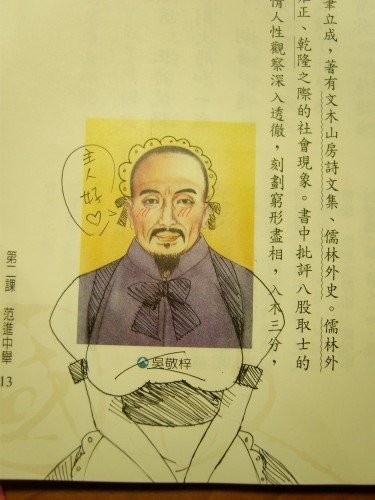
A Chinese ancient writter (male)


In Cassner-Lotto and Wright Benner’s report, the professionalism and oral communication are the only two required elements listed in the top five in each educational level. My speculation is that the relationship between these two skills explains the importance of sharing what you specialize in. It is not enough if you just make something. You need to use different way to explain your ideas or thoughts to different audiences, such as clients, superiors, or subordinates. In spite of they may be interested in the content; they may not buy in because of your presentation just like a prosaic lecture. In this time, don’t forget Web 2.0. There are a bunch of tools can support you to organize and improve your presentation, Prezi, Sliderocket, or Vuvox etc.


Reference
Cassner-Lotto, Jill, & Wright Benner, Mary (2006). Report: Are they really ready to work?: Employers perspectives on the basic knowledge and applied skills of new entrants to the 21st century U.S. workforce. The Partnership for 21st Century; Retrieved on June 24, 2010, from http://www.21stcenturyskills.org/documents/FINAL_REPORT_PDF9-29-06.pdf

http://minilove0.blog.163.com/blog/static/8547206201001282220897/